
Night emergency call triage and on-call dentist routing for dental clinics

Fonify
Aug 12, 2026 · 7 min read
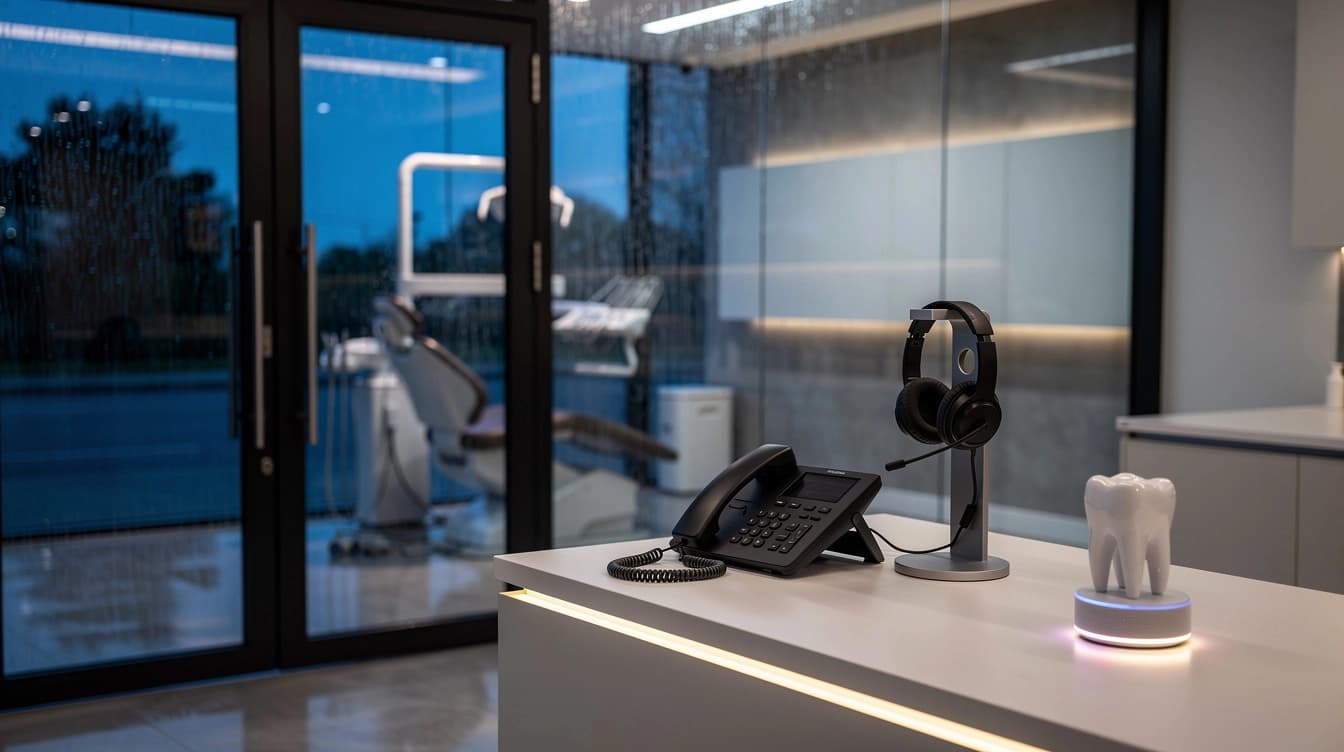
What is night emergency call triage and on-call dentist routing for a dental clinic?
Night emergency call triage and on-call dentist routing in a dental clinic is the AI-driven flow that classifies after-hours patient calls and sends them to the right channel. Life-threatening signs are directed to 112, true dental emergencies reach the on-call dentist, deferrable cases get the first morning slot, and info-only calls are logged.
Why is it critical to resolve most night calls without waking the dentist?
- The dentist’s cognitive load and next-day clinical performance suffer when sleep is frequently interrupted.
- A large portion of night calls are about appointments, pricing, insurance, and simple pain guidance. These can be safely managed by protocol.
- To avoid missing critical cases, disciplined triage is required. When life-threatening signs appear, immediate referral to 112 is essential. NHS and ADA guidance flags breathing or swallowing difficulty, rapidly spreading swelling, and uncontrolled bleeding as warning signs.
If you want to develop a detailed appointment flow, these practical guides help: Guide to creating appointment records by phone for dental clinics and, for continuity, How to reduce no-shows in a dental clinic?.
How does night emergency call triage and on-call dentist routing work for a dental clinic?
Fonify follows your clinic’s triage protocol. When in doubt, it always escalates. Example flow:
-
Life-threatening tier. In the following, the caller is directed to 112 and given step-by-step instructions.
- Difficulty swallowing or breathing.
- Swelling spreading, especially with fever and malaise.
- Uncontrolled bleeding.
These signs require urgent medical assessment. See sources such as the NHS dental abscess guide and the ADA dental emergencies page.
-
True dental emergency tier. Traumatic tooth avulsion, fracture with severe pain above threshold, facial trauma. The on-call dentist is engaged, or the patient is routed to a contracted emergency center if predesignated by the dentist.
-
Plan for first morning slot tier. Pain that can tolerate the night, a lost filling, transient sensitivity, denture fracture. The AI reserves the first suitable slot in your clinic and sends a confirmation SMS.
-
Appointment and pricing questions tier. A price range is shared, with a note that the exact fee is finalized after an exam, and a place is opened in a suitable slot. All records are reported to your team in the morning.
Triage languages, safety questions, framing sentences, and exceptions belong entirely to your clinic. Fonify minimizes error cost by escalating to the next safety tier whenever there is uncertainty.
Which triage questions quickly screen for life-threatening risk?
- Are you having trouble breathing or swallowing your saliva
- Is swelling in your face or neck spreading rapidly, and is there a fever
- Do you have bleeding that you cannot stop
- Has your condition clearly worsened in the past 24 hours
These questions quickly filter for life-threatening conditions. If any sign is present, the caller is directed to 112, and if alone, asked to summon support.
How much does it cost and how is the savings calculated?
The example below shows an assumed overnight call distribution for a typical 3-dentist clinic. Please replace with your own data.
Example calculation:
- Monthly night calls. 120 calls.
- Distribution. Life-threatening 2, true dental emergency 18, plan for morning 50, info-price 50.
- On-call dentist wake time. 15 minutes per case.
- Hourly dentist cost. 1,500 TL.
Dentist wake-up cost formula, example:
- Unnecessary wake-ups. Assuming AI resolves 80 percent of the 80 calls in info-price 50 and plan-for-morning 50, that is 64 calls.
- Time cost. 64 x 15 minutes equals 960 minutes, which is 16 hours.
- Monetary equivalent. 16 x 1,500 TL divided by 8 hours equals 3,000 TL.
Note. This is an example only. Calculate with your own call distribution and cost factors.
Comparison table:
| Approach | Night resolution rate | Need to wake dentist | Consistency | Recording and reporting |
|---|---|---|---|---|
| Traditional on-call line | Operator-dependent, variable | Frequent | Variable | Notes may be incomplete |
| Voicemail call-back | Low | Morning | Low | Often fragmented |
| Fonify AI triage | High, protocol-based | Only necessary cases | High, rule-based | Full call recording and summary |
Which metrics should be tracked, and how are they reported?
- Triage distribution percentages. Life-threatening, true emergency, plan for morning, info.
- Connect-to-dentist rate. Early warning for over or under sensitivity.
- Time to fill the first suitable slot. Shows the next-day impact of night demand.
- Callback times and missed calls.
- No-show rate. Measure the impact of confirmation SMS and reminders. For details, see the guide How to reduce no-shows in a dental clinic?.
Fonify provides these metrics via a dashboard and weekly email reports. API integration is available to feed your own BI system.
How to choose, and which criteria matter when selecting the right AI call solution?
- Protocol flexibility. Ability to define your own questions, language, and exceptions.
- Medical safety. Rule to escalate when in doubt.
- Integrations. Appointment book, SMS, EHR connections.
- Documentation. Call transcript, audio, summary note.
- Natural Turkish speech quality. Adaptation to regional accents and everyday language.
- Compliance and security. Access rights, audit trail, encryption.
Criteria checklist:
| Criterion | Evidence to request | Expected response |
|---|---|---|
| Medical safety | Documented escalate-when-in-doubt rule | Enabled by default |
| Protocol management | Authorized admin panel screens | Full drag-and-drop flow |
| Record keeping | Sample transcript and summary | Time-stamped, immutable |
| Integration | Supported calendars | Two-way read and write |
| Language proficiency | Demo recordings | Fluent, natural, polite |
Protocol example: how does the clinic write and update it?
- Opening and framing. Brief, reassuring intro with identity and contact verification.
- Safety questions. Breathing, swallowing, swelling spread, bleeding.
- Emergency and urgent decision tree. Tooth avulsion, fracture, severe pain.
- Pain management guidance. General advice and neutral information on OTC analgesics, with a reminder to consult the dentist.
- Appointment and fee policy. Price ranges and the note that final fees are set after an exam.
- Closing and confirmation. SMS with summary and appointment confirmation.
The clinic owns the protocol. Fonify provides templates and supports localization and adaptation. Every update goes live instantly. You can also automate post-op follow-up calls. For inspiration, see our article Post-op patient call guide for dental clinics.
Who is it not suitable for, and what are the limits?
- Cases with a high complication profile that require nightly surgical supervision.
- Organizations that often deviate from protocol and want a dentist to evaluate every call.
- Work styles that seek to give incomplete information or avoid official records.
- Organizations that do not accept data sharing or call recording.
In these situations, a manual on-call line is more suitable. Fonify excels at protocol-based call triage and documentation, while the final medical decision always rests with the dentist.
How is transparency and trust maintained with the patient?
- Tell the patient who they are speaking with and what will happen in the first sentence.
- If safety signs are present, clearly explain why 112 is recommended.
- Clarify that prices are ranges and will be finalized after an exam.
- Explain personal data protection and recording purposes in plain language.
This approach reduces the anxiety of patients calling at night, prevents unnecessary waiting, and preserves the on-call dentist’s energy and attention for true emergencies.
FAQ
- When should 112 be called for night-time toothache?
- Call 112 if there is difficulty swallowing or breathing, spreading swelling, rapidly worsening pain with fever, or uncontrolled bleeding. These signs can indicate systemic infection and airway risk. Mild pain and broken fillings usually can wait until morning.
- How does AI triage protect the on-call dentist?
- AI classifies the call based on your clinic’s protocol. When in doubt, it escalates by rule. Life-threatening signs go to 112, true dental emergencies reach the on-call dentist, and deferrable cases are scheduled. This reduces unnecessary wake-ups while ensuring critical cases are not missed.
- How are pricing questions handled in night emergency dental calls?
- Pricing and insurance questions are logged as information category. The AI shares example ranges from your fee schedule, clarifies that final pricing requires an exam, and offers the first suitable appointment. Full call transcripts and a summary are delivered to your team in the morning.
- Who writes the triage protocol and how is it updated?
- The protocol is written entirely by your clinic. The Fonify team only offers templates and adaptation suggestions. Changes such as new on-call rosters, treatment scope, or campaigns are entered by your authorized manager in the panel and take effect immediately.
- Who is not a good fit for an AI night call solution?
- Clinics with high surgical complication risk, those requiring systemic disease management, or those wanting every night call to be evaluated directly by a dentist may not be suitable. In such cases, a direct dentist on-call system and manual call line should be preferred.
Sources
Stay informed about the future of communication
New features, industry playbooks, and real call examples in your inbox a few times a month.
Related Posts
 Dental clinic phone appointment booking guideMandatory fields for creating phone appointment records in a dental clinic, block duration mapping, data minimization, double-booking prevention, and integration steps.Aug 12, 2026
 Birthday greeting call guide for dental clinicsStrengthen loyalty with a dental clinic birthday greeting call. A practical guide for IYS consent, short call flow, opt-out, and cost planning.Aug 12, 2026
 How to reduce no-shows in a dental clinicA patient who does not turn up means an empty chair. A practical way to cut no-shows: a reminder rhythm, a real waiting list, and answering calls outside opening hours.Aug 12, 2026